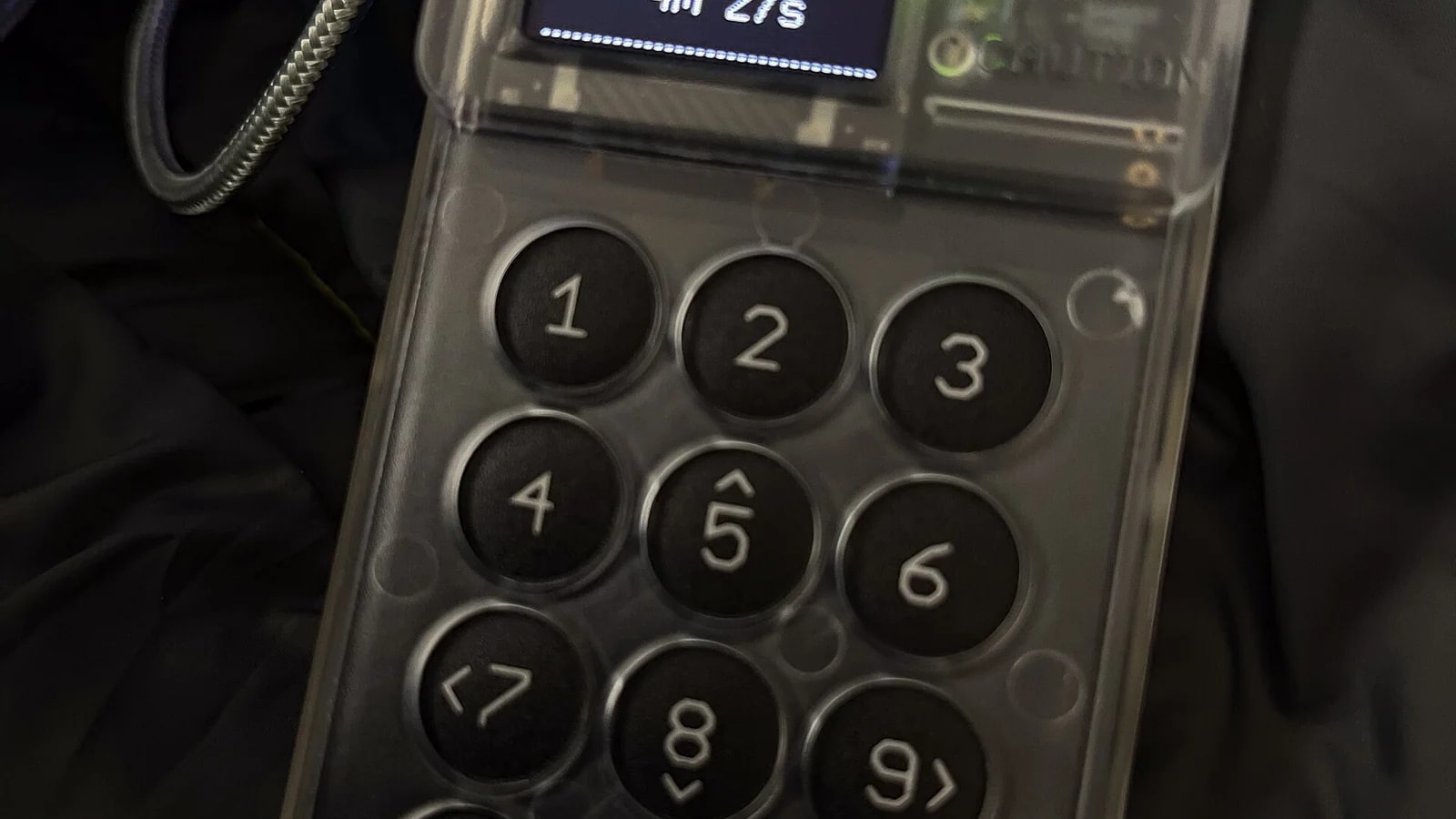
A user sees coins associated with a P2P order and assumes they are already in a wallet under personal control.
A hardware-wallet keypad illustrates the difference between private keys and platform escrow.
The problem behind wallet custody
In reality, the system holding a token and the party authorized to sign a transfer may be different.
How escrow affects settlement
In a marketplace escrow, the platform or its contracts manage release conditions for the duration of the trade. A personal wallet instead puts signing responsibility on the key holder. Centralized exchange balances introduce another custody arrangement with different failure modes. A P2P crypto agent is not necessarily the custodian of locked crypto or a customer's private keys. Shiftal Coin explains those models without hosting wallets.
A scenario: wallet custody under pressure
A participant sees funds in an exchange interface and assumes the same amount is already available under a personal recovery phrase. Ask who controls the signing keys and whether the balance has passed from escrow into a withdrawable account. That one distinction changes who can authorize a recovery or outgoing transfer.
Account visibility does not always mean personal custody
Escrow, centralized exchange balances and personal wallets can all show cryptocurrency values, but the person authorized to move those funds may be different. Under escrow, release follows the platform's conditions. An exchange may manage assets in pooled custody while showing a customer ledger balance. A self-custody wallet instead relies on the holder's signing keys. A visible amount is therefore not a complete description of ownership, control or recoverability. It is necessary to identify where the asset currently sits and which action actually transfers control.
Trace one trade from the seller's escrow lock to the buyer's credit and eventual withdrawal. For each stage ask which platform or key controls the next transaction. A buyer moving to a private wallet should verify the address and network before concluding that custody has shifted. Someone who can explain the trade is not necessarily the person who holds the keys. The distinction becomes important if a later mistake requires support, because a service may no longer control the assets it previously displayed.
The identifiers worth comparing
Identify the exact stage when custody passes from escrow to the user's receiving wallet. Check network compatibility, withdrawal conditions and whether the address is controlled by the intended recipient. Keep private keys and recovery material outside any trading chat. The custody responsibility across different crypto arrangements is discussed further in who actually controls a crypto wallet balance.
- Identify the party authorized to sign each outgoing transfer.
- Separate an internal account balance from a personal-wallet address.
- Validate network compatibility before moving assets into self-custody.
Where assumptions about escrow fail
A wallet interface can show a pending credit before the owner is able to move assets. Conversely, releasing from escrow to the wrong address can create a final transfer that support cannot simply reverse.
The final check on wallet custody
Separate custody from account visibility when evaluating a trade. The key question is who can authorize the next movement and under which conditions, not whose name appears on a dashboard.
#WalletCustody #Escrow #PrivateKeys